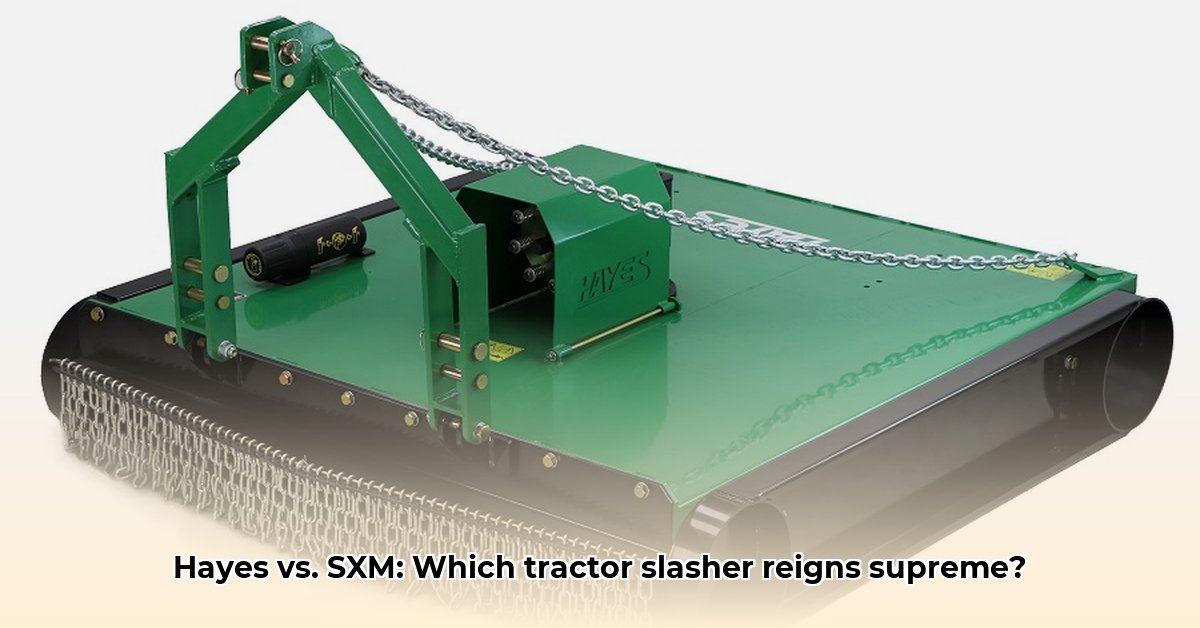
Choosing the right tractor slasher is a critical investment for Australian farmers, directly impacting efficiency and profitability. This guide compares two leading brands, Hayes and SXM, helping you select the ideal model for your operation. We'll analyze key features, safety considerations, and the buying process, empowering you to make an informed decision.
Key Features Comparison: Hayes vs. SXM
Both Hayes and SXM offer robust tractor slashers, but their strengths cater to different farm needs. This table provides a side-by-side comparison:
| Feature | Hayes | SXM | Considerations |
|---|---|---|---|
| Cutting Width & Capacity | Varies by model; generally suitable for smaller to medium-sized farms. | Varies by model; often offers wider cutting widths ideal for larger properties. | Consider paddock size and the volume of slashing required. |
| Build & Durability | Construction quality varies by model; generally robust. | Typically utilizes heavier-duty materials and robust construction for extended lifespan. | Durability directly impacts longevity and minimizes costly downtime. |
| Materials Used | Varies widely depending on the specific model. Refer to individual model specifications. | Often features galvanized steel for superior corrosion resistance and strength. | Prioritize materials resistant to Australian weather conditions (e.g., rust, UV degradation). |
| Safety Features | Meets Australian safety standard WC02792 (check specific model features). | Meets WC02792; some models may include additional safety enhancements. | Safety is paramount. Check for features like emergency shutoffs, blade guards, and PTO shields. |
| Maintenance & Servicing | Maintenance requirements vary by model. Check individual manuals. | Parts accessibility and comprehensive service manuals are often strong points. | Ease of maintenance reduces downtime and lowers long-term operational costs. |
| Price Range | Generally more budget-friendly. | Typically positioned at a higher price point reflecting superior durability and features. | Evaluate the balance between initial cost and long-term value (including maintenance and repairs). |
| Dealer Network & Support | Dealer network coverage varies regionally. Check your local availability. | Usually boasts a wider and more established dealer network for enhanced service and parts access. | Prompt access to repairs and parts is crucial, particularly during peak seasons. |
Finding the Right Slasher: A Step-by-Step Buying Guide
Selecting the perfect slasher necessitates careful consideration. Follow these steps:
Assess Your Land: Determine the acreage requiring regular slashing. Smaller farms may find a Hayes slasher sufficient; larger properties often benefit from SXM's increased capacity.
Vegetation Type: Identify the vegetation type. Dense vegetation necessitates a more powerful machine.
Budget: Hayes generally offers more budget-friendly options. However, a more expensive SXM slasher might offer better long-term value through its increased durability and reduced maintenance needs.
Maintenance Considerations: Prioritize ease of access to components for regular servicing.
Dealer Network: Confirm local dealer support for prompt repairs and parts availability.
Risk Mitigation and Safety: Prioritizing Farm Safety
Safety is paramount; always prioritize risk mitigation.
Mechanical Failures: Regular maintenance and adherence to manufacturer recommendations minimize breakdowns. Consider extended warranties for added peace of mind.
Blade Damage: Utilize high-quality blades and ensure regular sharpening or replacement to maintain cutting efficiency and safety. Dull blades increase strain and risk.
Safety Systems: Inspect the slasher before every use, verifying the functionality of all safety mechanisms (PTO engagement, blade guards, emergency stops). Strict WC02792 compliance is crucial.
Parts & Repairs: A strong dealer network ensures minimal downtime during repairs.
Conclusion: Making Your Final Decision
The optimal choice hinges on individual farm requirements. Consider budget, operational scale, and vegetation type. Consult with dealers from both brands to discuss your specific needs. Thorough research minimizes future headaches and maximizes return on investment. Remember, prioritizing safety and selecting a reliable after-sales service network are key factors in this important farm equipment decision.